The context
Fast team. No foundations.
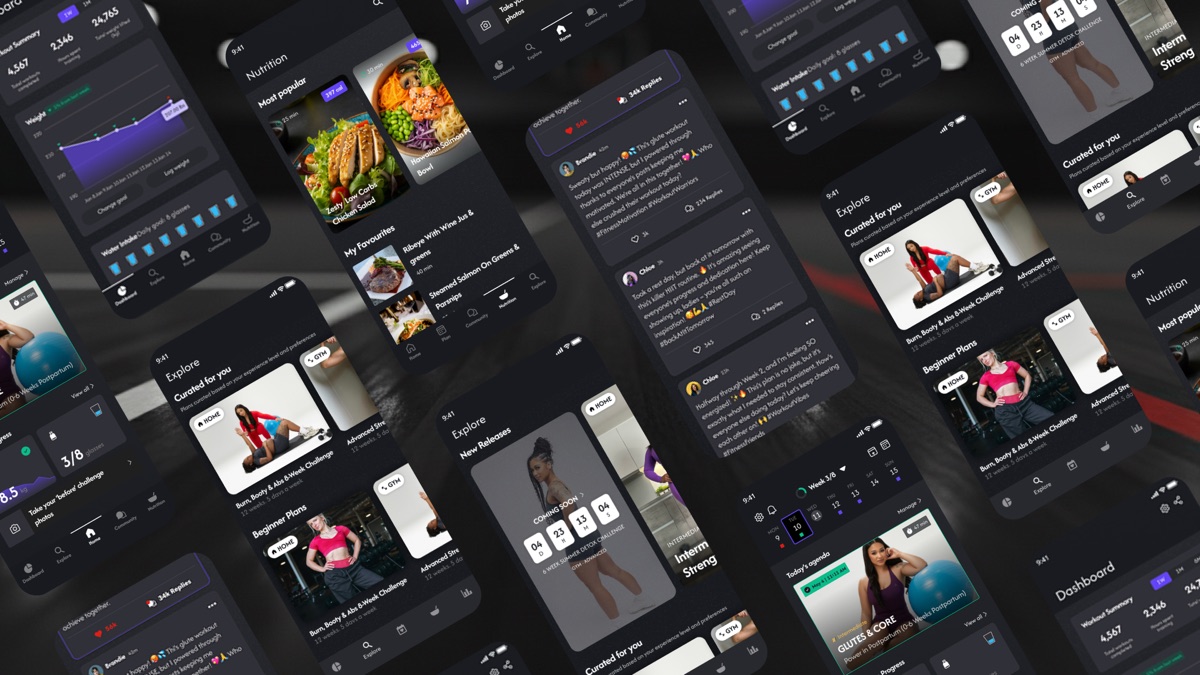
MyARC enables fitness content creators to monetise their audience through a customised mobile app. When I came in, the team was lean, productive, and moving quickly. They were also burning through money, shipping without a design system, and making UX decisions on feel rather than evidence.
There was no product function. No design system. No structured research practice. The founders and developers were making product decisions in real time, which worked at small scale but was creating inconsistency and technical debt as the platform grew.
My first job was not to slow them down. It was to prove that building the foundations would make them faster. That required earning trust before changing anything.
The foundation
Building the design system that outlasted the contract.
I audited what existed, consolidated the design language, and built a component system in Figma that covered the full product surface. But the goal was not just to have a design system. The goal was to have a design system the team could use without me.
I trained the developers in Figma. Not deeply, but enough. They learned to navigate the system, use existing components, and assemble screens for new features without needing a designer in every conversation. When my contract ended, the team kept shipping UI independently. That was the measure of success for this piece of work.
The AI features
Three features. Real outcomes.
AI was not a strategy at MyARC. It was a practical tool. We shipped three features that used it in ways that genuinely improved the user experience rather than just adding a badge to the app store listing.
"The question with any AI feature is not 'can we build this?' It is 'does this actually make someone's experience meaningfully better?' If the answer is no, it is just a gimmick."
The ecommerce work
Fixing the leaky bucket.
Alongside the AI features, I redesigned the checkout and onboarding flows. The original experience had friction at multiple points that was causing users to drop before completing a purchase or completing setup.
I ran user research to identify where people were stopping and why, then redesigned the flows based on what I found. The results were measurable: churn reduced by 36%, consumer conversion increased by 15%, and B2B conversion increased by 45%. The B2B number in particular reflected a complete rethink of the outreach experience and customer journey for fitness creators signing up to the platform.