The beginning
A prototype, a phone call, and a yes.
It started with a prototype. A fellow founder and I put together a concept for a mental performance app, sent it to Ben Crowe, one of Australia's most respected performance coaches, and he called back and said he was in. Twelve months of building before we launched publicly. Everything from scratch: the product, the design system, the team rituals, the commercial model, the hiring process.
My title was Head of Product and Design. My actual role was closer to co-CEO. I owned product strategy and roadmap, but also commercial decisions, P&L conversations, hiring calls, and the operational infrastructure that kept everything running. The goal from day one was to build a business that did not depend on Ben being in every room. Personal brand businesses fail when the brand gets tired. We were building something that could outlast any one person.
The product
0 to 20,000 users.
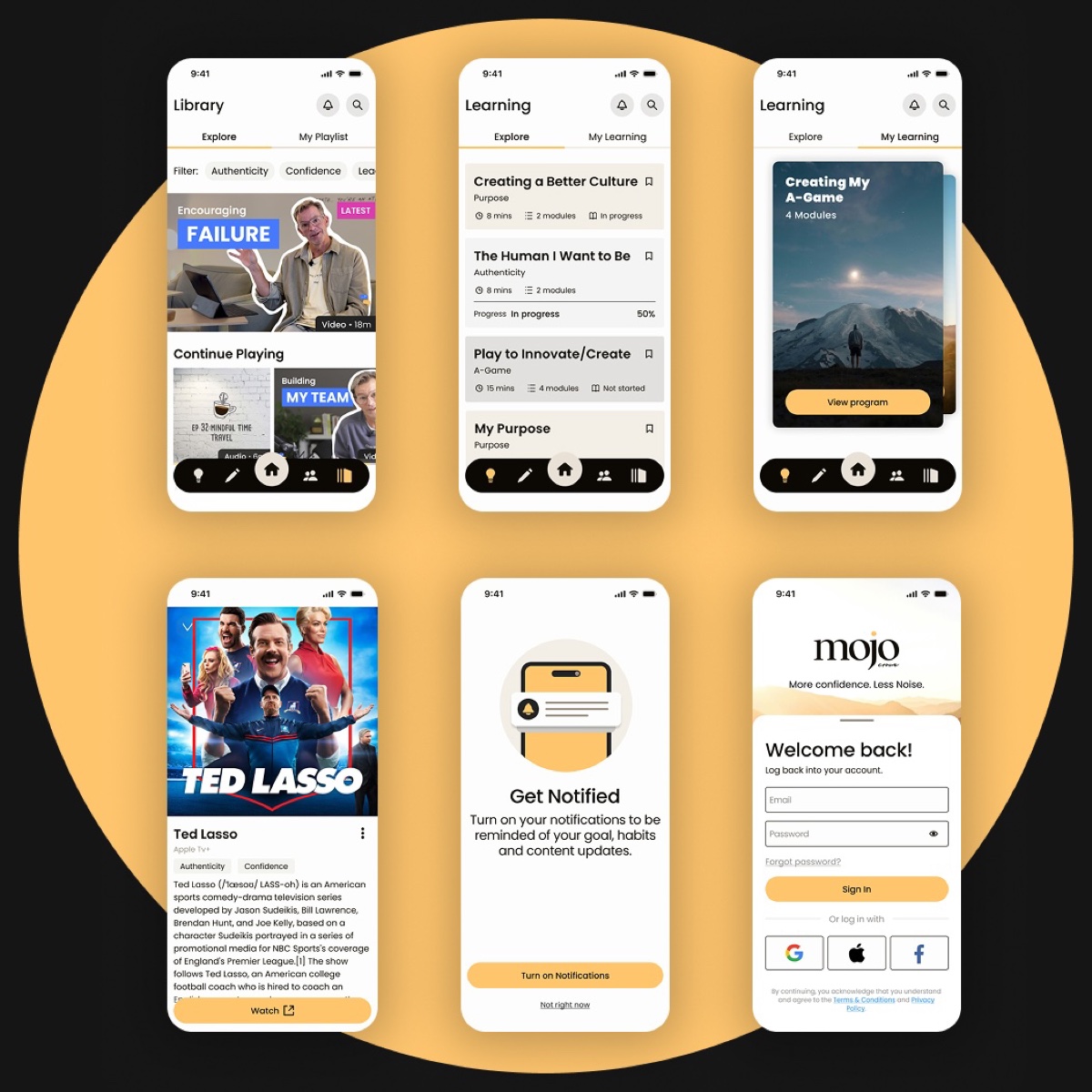
The B2C app was a mental performance platform. Modules, video content, daily habits, journaling. Everything rooted in Ben's coaching methodology. My job was to translate that methodology into product decisions without diluting it, which meant being close to Ben while also being willing to push back when instinct and data disagreed.
We reached 20,000 users within two years of launch, driven by product-led growth and the strength of Ben's existing audience. NPS increased by 9 points across two quarters. Team satisfaction went from 3.9 to 4.4 within three months of me changing how we worked together.
Alongside the B2C app we built a B2B learning portal for corporate clients and started exploring an AI platform, partnering with Scalable.Care and UT Texas for research and experimentation. The Melbourne United partnership during the NBL24 season expanded our market reach by 23%.
"The best thing I can do as a leader is make myself unnecessary. Build capability, clarity, and systems that work without me. That was the goal at Mojo from day one."
The team
Building people, not just headcount.
We scaled from 4 to 17 people across engineering, product, design, content, and marketing. Early on we made a hiring mistake, a senior engineer brought in without a proper process, who turned out to be the wrong fit technically and culturally. That experience taught me something important: the recruitment process is itself a product. I redesigned it completely.
From that point every hire went through a multi-stage process: phone screen, cross-functional culture panel, live skills assessment, and final founder interview. We never rushed it again. The team we built as a result was one of the things I am most proud of from those four years.
I applied the same coaching philosophy to the team that I apply pitchside. Ask questions rather than give answers. Build self-awareness before changing behaviour. Create psychological safety before asking for high performance. Employee satisfaction scores reflected that approach.
The hard part
What did not work, and why.
I need to be honest about this. We made strategic errors in the final phase. We over-invested in B2C when the stronger commercial opportunity was in B2B. We had senior people in the wrong roles. We let unspoken tensions at leadership level go unaddressed for too long because of personal relationships and the pace of growth.
I was the one with the clearest commercial read on the situation. I flagged the problems. But I did not push hard enough on the conversations that needed to happen. I compensated by hiring when I should have confronted. That is a pattern I have since learned to name and interrupt.
The business wound down to a leaner model. Ben continued with keynotes and courses. I moved on. But the four years produced something real: a platform that helped people through genuinely difficult moments in their lives. We had users tell us in research sessions that our product had kept them alive when nothing else had. That does not go away.